
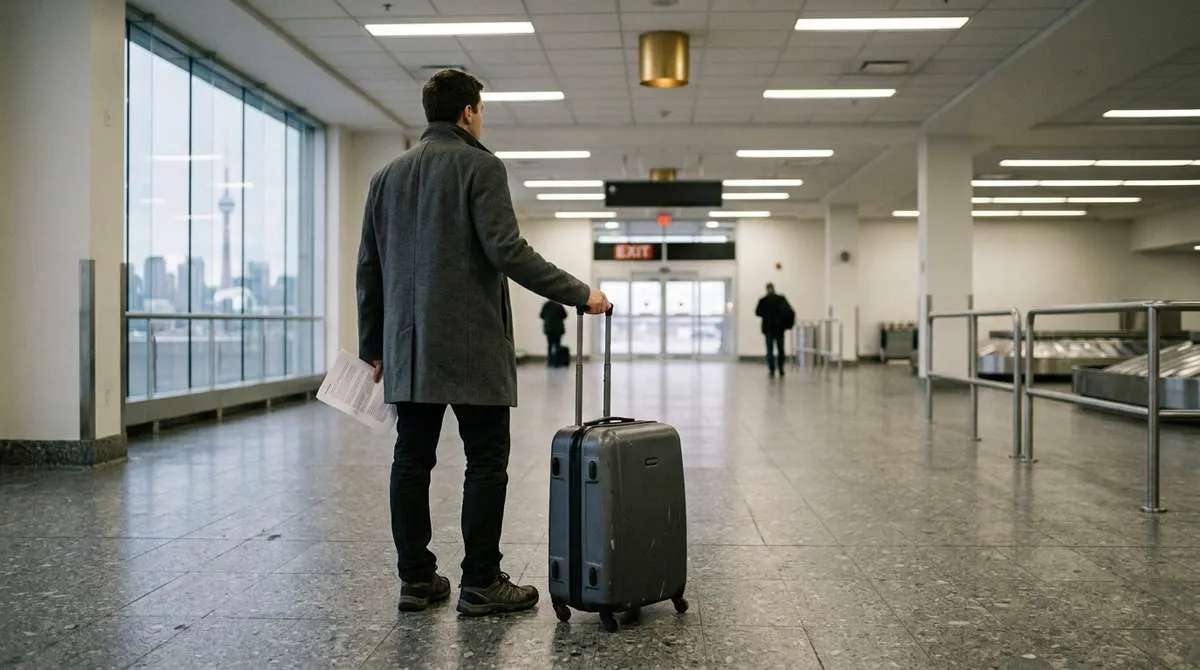
A soft landing means travelling to Canada, completing the formalities that make you a permanent resident, and then going home to wind up your affairs before moving properly. It is legal, common, and often the right call when a confirmation document is about to expire and you are not ready to relocate.
It also has two consequences that most guidance skips. Your residency obligation starts running on the day you land rather than the day you move, and getting your permanent resident card becomes considerably harder once you leave. Both are manageable, but only if you plan for them before you book the flight. The mechanics of the landing itself are covered separately in our guide to the landing process.
What a Soft Landing Achieves and What It Does Not
A short first trip is worth taking for a narrow set of reasons. Being clear about which ones apply keeps the trip from becoming an expensive dry run.
The Status Change Is the Whole Point
Everything else is secondary. Landing converts an approved application into permanent resident status before the confirmation of permanent residence expires, and that document cannot be extended. Where the expiry is close and the move is not ready, a soft landing preserves years of work for the price of a flight.
Tasks Worth Completing on a Short First Visit
Two things transfer real value. A Social Insurance Number can be obtained in person once you have landed and does not expire, and a bank account can be opened using the confirmation document as identification, which makes transferring funds later straightforward.
Others are worth less than they appear. A provincial health card is tied to living in the province and usually lapses if you leave. A driver's licence exchange normally assumes residency. Neither survives a two-week visit in any useful form.
The Goods to Follow List
At your first entry as a permanent resident you can declare both the goods with you and the goods still to come. Only items recorded on those lists qualify to enter duty free later as settler's effects. Someone who lands with hand luggage and declares nothing has quietly forfeited that exemption for the household shipment that follows on the real move, which is a costly omission and a very easy one to make.
The PR Card Problem After a Soft Landing
This is where older advice goes wrong, because the process changed and the workarounds it suggests no longer work.
The Card Is Mailed Only to a Canadian Address
After landing you have 180 days to give IRCC a photo and a Canadian mailing address, and your first card is then sent automatically. Miss that window and you have to apply for the card yourself, which adds months.
A soft lander flying home in a fortnight has no Canadian address of their own to supply. Using a friend or relative's address means relying on someone to receive the card and forward it internationally, and the card is issued only to permanent residents inside Canada in the first place. Anyone planning a short landing should sort out where that card is going before departure rather than after.
Returning to Canada Without a PR Card
A commercial carrier will not board a permanent resident who has neither a valid card nor a permanent resident travel document. The travel document is issued by a visa office abroad, is single use, and takes time you may not have. This is the single most common way a soft landing turns into a problem: the person is a permanent resident, entirely compliant, and cannot get on the plane.
How the Residency Clock Works From Your Landing Date
The obligation is widely misdescribed, including on pages that otherwise get the subject right.
The Five-Year Window Opens on Landing Day
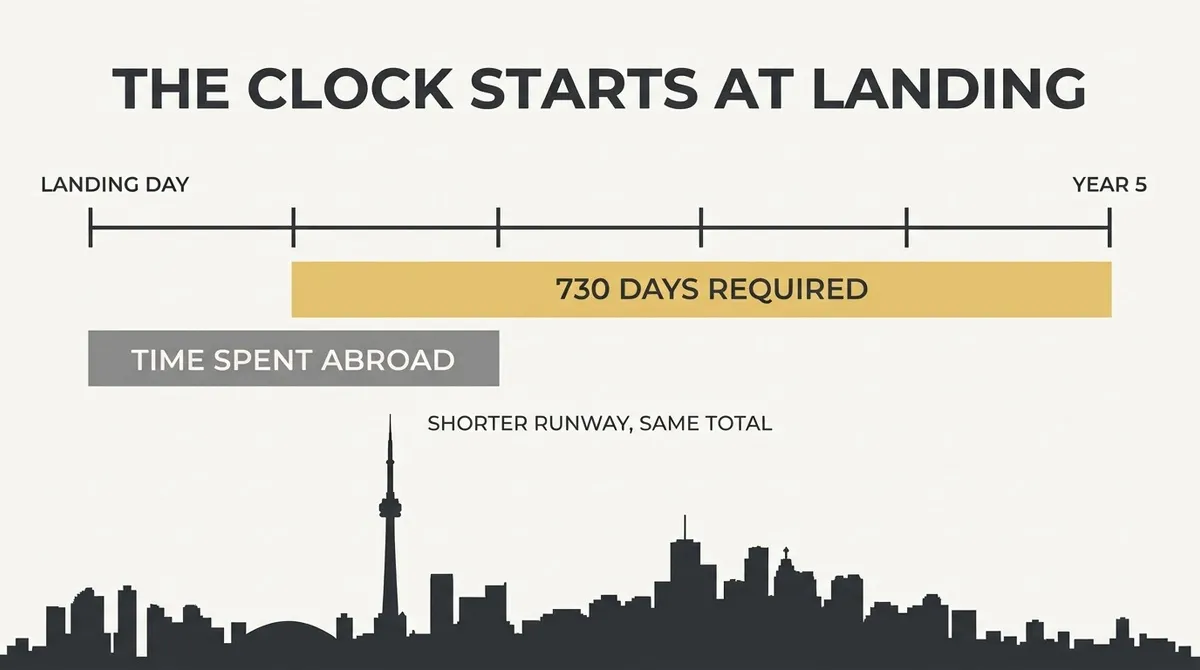
A permanent resident must be physically present in Canada for at least 730 days in every five-year period. For a new permanent resident, the first such period begins on the landing date, not on the date of the eventual move. Time spent abroad after a soft landing is time subtracted from the runway, even though nothing about your life has changed yet.
Why a New Permanent Resident Is Judged Differently
There is an important nuance here that works in your favour. Under section 28(2)(b)(i) of the Immigration and Refugee Protection Act, a permanent resident of less than five years is assessed on whether they will be able to meet the obligation within the five-year period following the day they became a permanent resident. The days already behind you are not the test. The question is whether enough time remains ahead.
So someone who landed eighteen months ago and has spent two weeks in Canada has breached nothing. They have three and a half years left in which to accumulate 730 days, and an officer assessing them looks at that remaining window and at whether their plan is credible.
The Practical Ceiling on Time Away
The arithmetic sets its own limit. With 730 days needed inside a five-year window, returning much beyond the three-year mark leaves barely enough runway, and none at all for illness, a delayed job offer or a slow travel document application.
The figure of three years is sometimes quoted as an entitlement to stay away. It is not. It is the point at which compliance stops being comfortable and starts being arithmetic, and planning to the edge of it is how people end up in front of the PR card renewal process without the days to support it. The obligation and the exceptions that can count time abroad are set out in section 28 of the Act.
When a Soft Landing Is the Wrong Choice
The trip is not automatically worth taking, and two situations argue against it.
Where the Move Is Close Anyway
If the permanent move is within a few months of the confirmation document's expiry, a separate landing trip buys very little and costs a flight, accommodation and the card complication. Landing once, properly, with a Canadian address ready is cleaner.
Where a Long Absence Is Already Planned
Someone who knows they cannot move for three or four years faces a genuine problem rather than an inconvenience, because the clock will be most of the way through before they arrive. That situation needs advice on the specific timeline before landing, not afterwards, and it is set out further in IRCC's guidance on loss of permanent resident status. The wider obligations attached to the status are covered on our permanent residence page.
If your confirmation document is approaching its expiry and you are not ready to move, the timing question deserves a proper look before you book anything. SEP Immigration, led by Sepehr Falahati (RCIC, CICC and IRB member R533959), can work through your dates and set out what a soft landing would cost you later.
Official sources
- Immigration and Refugee Protection Act, section 28, residency obligation
- Immigration, Refugees and Citizenship Canada, loss of permanent resident status
- Immigration, Refugees and Citizenship Canada, permanent resident cards
- Canada Border Services Agency, settlers' effects and goods to follow
This article provides general information and is not legal advice, and immigration rules change without notice. Verify residency obligation requirements and card procedures against Immigration, Refugees and Citizenship Canada before travelling; information current as of September, 2026.
Frequently asked questions
01How long can you stay outside Canada after a soft landing?
There is no fixed allowance, and the three years often quoted is a derived ceiling rather than a permission. You need 730 days of physical presence within the five-year period that began on your landing date, so every month away shortens the runway left to accumulate them. Returning close to that mark leaves no margin for anything going wrong.
02Can you get a Social Insurance Number during a soft landing?
Yes. A Social Insurance Number can be obtained in person at a Service Canada office once you have landed, and it does not expire. Opening a bank account is also possible using your confirmation document as identification. These are the two tasks that genuinely transfer value from a short trip, since both stay useful whenever you return.
03Does provincial health coverage start during a soft landing?
Generally not in any lasting way. Provincial health insurance is tied to residency in the province rather than to permanent resident status, and several provinces impose a waiting period and require that you actually live there. Enrolling and then leaving usually means coverage lapses. Private travel insurance is the realistic option for a short trip.
04Can a family soft land at different times?
Each person named on the confirmation document lands individually and each has their own expiry to meet, so family members can land separately. The residency clock then runs separately for each of them from their own landing date. Splitting landings is common where school terms or notice periods make one trip impractical, but it means tracking several deadlines rather than one.
05What happens if your confirmation document expires before you land?
The status is lost and IRCC does not extend the document. The expiry is normally tied to the medical examination or passport validity, whichever runs out first, and it is not negotiable at the border. Anyone approaching that date without a realistic plan to travel should treat it as the most urgent item in the file.
06Do you need to declare goods you are not bringing yet?
Yes, and this is the step most soft landers skip. At your first entry as a permanent resident you can list both the goods with you and the goods still to follow, and only items on those lists later enter duty free as settler's effects. Landing with a suitcase and filing nothing forfeits that exemption for the shipment that arrives on the permanent move.
Stay informed
Get our immigration updates first on Google
Add SEP Immigration as a preferred source and our latest news and guides appear more often in your Google results.
About the Author

Sepehr Falahati
CEO of SEP Immigration
- CICC Licensed
- RCIC #R533959
- IRB Member
Sepehr Falahati is a Regulated Canadian Immigration Consultant (RCIC #R533959), licensed by the College of Immigration and Citizenship Consultants (CICC).
Read more about Sepehr FalahatiReviewed By


Continue Reading