
Denied Entry to Canada: What Happens at the Border
Reviewed by Mohsen Khorvash and Mahsa Barati
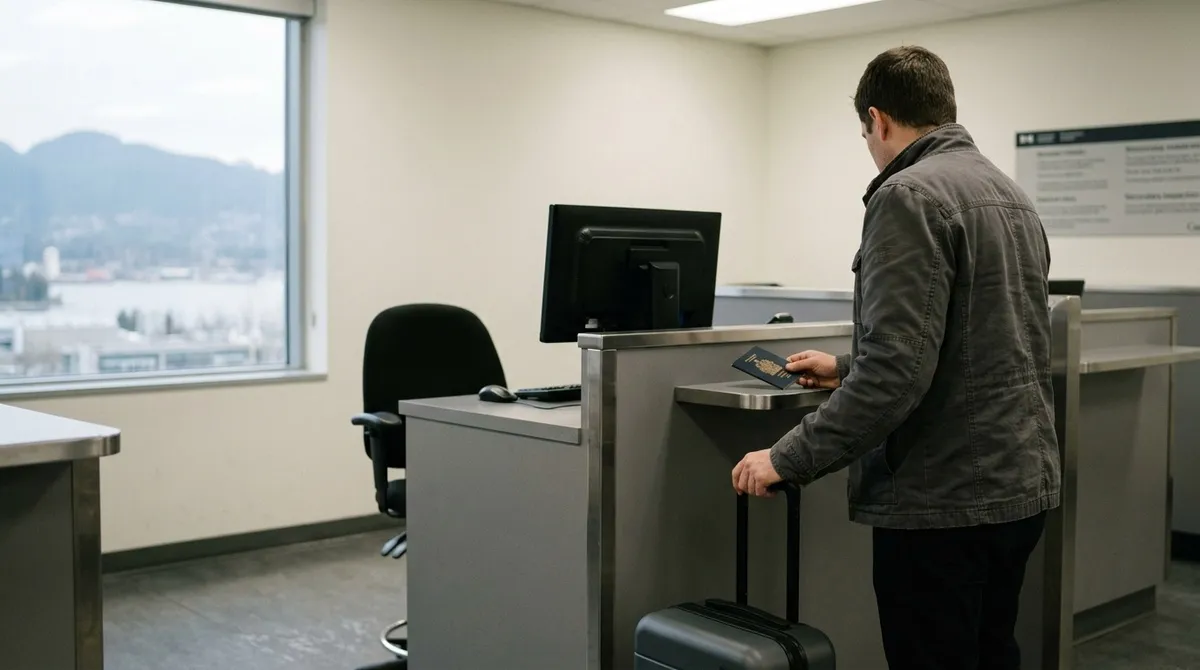
Being refused at a Canadian port of entry is not a single event with a single outcome. What happens in the following hour depends on which of several options the officer takes, and the difference between them shapes how hard it will be to enter Canada later.
Most guidance on this treats refusal as a consequence of a criminal record. That is one common ground among many, and it is not what most travellers are refused for.
What Happens When You Are Denied Entry to Canada
An officer who forms the opinion that letting someone into Canada would breach the Immigration and Refugee Protection Act has a choice to make, and the choice is not simply whether to say yes or no.
The Officer Has Three Options, Not One
The officer may prepare an inadmissibility report under section 44(1) of the Act, allow the traveller to withdraw their application to enter Canada, or admit them and impose conditions under section 44(3). These are materially different outcomes. Only the first begins an enforcement process.
Withdrawing Your Application to Enter
Withdrawal is the best outcome available to someone who is not going to be admitted, and few travellers know to ask about it. The traveller leaves Canada voluntarily, no inadmissibility report is written, and no removal order follows. The refusal is still recorded, so it is not invisible, but the file carries no enforcement history attached to it.
Whether withdrawal is offered is at the officer's discretion. Being calm, answering questions directly and not arguing the point once the decision is clear makes it more likely than insisting on entry does.
Review by a Minister's Delegate
Where a report is written, it goes to a Minister's delegate, a second official who reviews it and decides whether it is well founded. The traveller is told the reasons for the refusal and gets an opportunity at that case review to put forward evidence rebutting the allegation.
This is the real decision point, and it is easy to miss because it happens in a back room at the border rather than in a formal setting. If the delegate finds the report well founded, they may issue a removal order themselves in the categories within their jurisdiction, or refer the matter to the Immigration Division of the Immigration and Refugee Board for an admissibility hearing.
Why Travellers Are Refused at a Canadian Port of Entry
Grounds fall into two groups, and the second is the larger one.
The Burden of Proof Sits on the Traveller
This is the rule that catches people with nothing whatsoever in their history. The onus of establishing admissibility rests on the foreign national, not on the officer to prove anything against them. A traveller who cannot satisfy an officer may be refused on that basis alone, without any adverse finding being made.
Officers are not obliged to accept an account simply because it is plausible, and there is no presumption in favour of entry. What resolves this is documentation rather than explanation.
Grounds That Do Not Involve a Criminal Record
Insufficient funds for the stay described, a stated purpose the officer does not accept, weak ties to the home country, a previous overstay, a travel pattern suggesting an intention to remain, missing supporting documents, and medical or financial grounds all produce refusals. Misrepresentation is its own category and is treated far more seriously than the matter concealed.
Holding a visa or an electronic travel authorization does not settle it. Those documents authorize travel to Canada. Admissibility is assessed afresh at the port of entry every time.
Detention, Counsel and Removal Orders at the Border
Three procedural points decide how badly a refusal goes, and none of them are widely published.
When a Traveller Can Be Detained
Someone refused admission may be detained on two grounds only: reasonable grounds to believe they are a danger to the public, or reasonable grounds to believe they would not appear for examination. Anyone detained must be told why and informed of their right to counsel.
The Right to Counsel Is Narrower Than Expected
Everyone formally detained under the Act has the right to counsel. Examination, however, is not treated as detention no matter how many hours it takes, and the case review by the Minister's delegate counts as part of the examination process. There is therefore no legal right to counsel at the review itself. Where counsel is already available and ready to proceed, they may be permitted to attend.
Removal Orders Issued at the Border
Where a removal order is issued rather than a withdrawal accepted, the type matters. An exclusion order normally bars return for a set period. A departure order requires the person to leave and confirm their departure, and becomes a deportation order if they do not. A deportation order is permanent in effect and requires authorization to return to Canada before any future entry.
What to Do After Being Denied Entry to Canada
The sequence matters more than the speed. Travelling again before the ground is resolved is the most common and most expensive mistake.
Establish Which Ground Was Recorded
Travellers routinely leave the border without knowing what was actually written down, and an assumption about the reason produces a fix aimed at the wrong problem. Requesting your GCMS notes gives you the officer's reasoning rather than the summary you were given verbally.
Resolve the Ground Before Travelling Again
Criminal grounds are resolved through deemed rehabilitation, an application for criminal rehabilitation, or a temporary resident permit where travel cannot wait. Grounds concerning purpose, funds or ties are resolved with evidence rather than an application, which means a stronger documentary package rather than a repeat of the same one.
Check Whether Authorization to Return Is Required
This depends entirely on whether a removal order was issued and which type. Someone who withdrew their application needs nothing. Someone subject to a deportation order needs authorization before travelling, and arriving without it produces a second refusal on worse terms. The procedural framework behind all of this is set out in IRCC's guidance on refusal at the port of entry.
If you were refused at the border and are not certain what was recorded or what it means for your next attempt, that is worth resolving before you book anything. SEP Immigration, led by Sepehr Falahati (RCIC, CICC and IRB member R533959), can obtain the file, identify the ground and set out what has to be done about it.
Frequently asked questions
01Can a Canadian citizen be denied entry to Canada?
No. A citizen has a right to enter and cannot be refused, though they can still be examined, questioned at length and sent to secondary inspection. Permanent residents also have a right of entry and cannot simply be turned away, although a permanent resident can be reported for inadmissibility and face the proceedings that follow. The process described above applies to foreign nationals.
02How long does a denied entry stay on your record?
There is no expiry. The refusal sits on the immigration file and the next officer sees it. That is not a bar on returning, and many people refused once enter without difficulty afterwards once the underlying issue is resolved. What the record does is raise the standard of proof expected next time.
03Is being denied entry the same as being deported?
No, though they can overlap. A simple refusal, particularly where the traveller withdraws their application to enter, involves no removal order at all. It becomes a removal matter only where a report is written, a delegate finds it well founded and an order is issued. Establishing which happened is the first thing to sort out.
04Can you be refused entry for not having enough money?
Yes. Financial capacity is part of the assessment, and a traveller who cannot show they can support the stay they have described may be refused. The same applies to a purpose the officer does not accept, weak ties at home, or a travel history suggesting an intention to remain. None of these involve a criminal record.
05Can you reapply for a visa after being denied entry?
Yes, and there is no waiting period unless a removal order was issued. What matters is whether the new application addresses the concern that produced the refusal. Refiling something that looks identical, with no new evidence on the point the officer doubted, tends to produce the same result and a second refusal on the file.
06Can you appeal a decision to deny you entry?Can you appeal a decision to deny you entry?
A foreign national refused at a port of entry has no appeal right against that decision. The practical opportunity to change the outcome is the case review with the Minister's delegate, which happens at the border rather than afterwards. Judicial review at the Federal Court exists but is rarely proportionate to a visitor refusal.
Stay informed
Get our immigration updates first on Google
Add SEP Immigration as a preferred source and our latest news and guides appear more often in your Google results.
About the Author

Sepehr Falahati
CEO of SEP Immigration
- CICC Licensed
- RCIC #R533959
- IRB Member
Sepehr Falahati is a Regulated Canadian Immigration Consultant (RCIC #R533959), licensed by the College of Immigration and Citizenship Consultants (CICC).
Read more about Sepehr FalahatiReviewed By


Continue Reading