
Police Certificates for Canadian Immigration
Reviewed by Mohsen Khorvash and Mahsa Barati
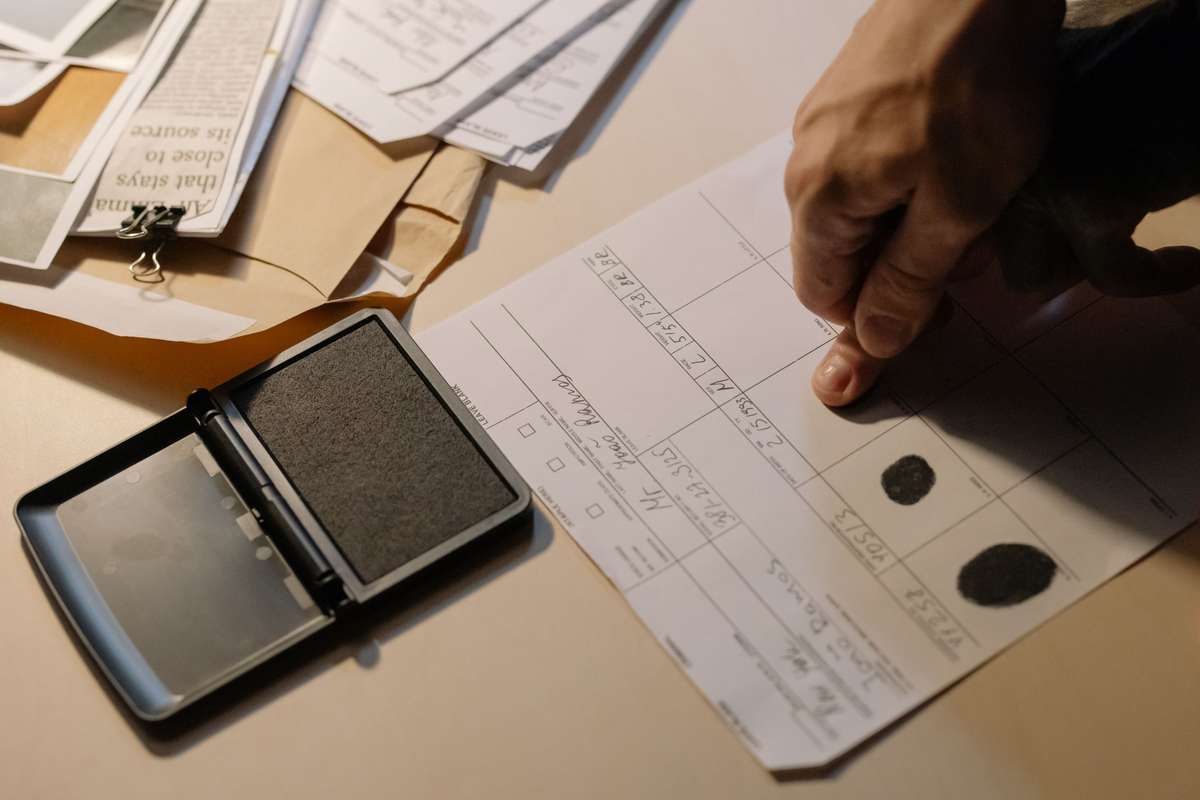
A police certificate is one of the few documents that can stop a permanent residence application before it starts. IRCC uses it to check whether you are inadmissible on criminal grounds, and the rules about which countries you need one from, and how recently it must have been issued, are stricter than most applicants expect. A single missing or wrongly dated certificate can make an application incomplete and get it returned.
The timing pressure is real for Express Entry candidates in particular, because you have only 60 days from an invitation to apply, while some countries take months to issue a certificate.
This guide explains who needs one, which countries you need them from, the validity rules that catch people out, and what to do if a country will not cooperate or your certificate shows a conviction.
Key Facts About Police Certificates
- Who needs one: you and every family member aged 18 or older.
- Which countries: anywhere you stayed six months or more in a row since turning 18.
- Not Canada: IRCC checks Canadian records directly with the RCMP.
- Current country: the certificate must be less than six months old when you apply.
- Former countries: the certificate must be issued after your last stay of six months or more.
- Format: colour scans of the original certificate.
What Is a Police Certificate?
A police certificate is an official document from a national or local police authority showing whether you have a criminal record in that country. Different countries use different names for it, including police clearance certificate (PCC), certificate of good conduct, judicial record extract, or criminal record check. They all serve the same purpose for Canadian immigration: helping an officer decide whether you are admissible on criminality or security grounds.
It is worth separating two things that often get confused. The police certificate is a document you obtain and submit. Background and security screening is a separate process the Canadian government conducts on its own. You are responsible only for the first.
Do You Need a Police Certificate for Canada PR?
Yes. Police certificates are required with permanent residence applications, for you and for each family member who is 18 or older, whether or not they are coming with you. Under Express Entry, the online system asks for certificates covering the last 10 years, but an officer can request additional certificates from any period since you turned 18. That is why the safest approach is to build a complete residence history first, then work out which certificates it generates.
Which Countries Do You Need a Police Certificate From?
The rule is based on where you lived, not your citizenship. You need a certificate from every country where you stayed for six consecutive months or longer since the age of 18. A few examples make the boundaries clearer.
| Situation | Certificate needed? |
|---|---|
| You lived in India for four years as an adult | Yes |
| You studied in the United States for eight months at age 16 | No, it was before you turned 18 |
| You worked in the UAE for seven consecutive months at age 25 | Yes |
| You spent five months in the United Kingdom, then left | No, it was under six months |
| You have lived in Canada for three years on a work permit | No, IRCC checks with the RCMP |
| Your 19-year-old child is included in your application | Yes, for their own countries of residence |
The six months must be consecutive, in one stay, not added up across several short visits. If you are unsure whether a period counts, it is safer to obtain the certificate than to omit it.
Do You Need a Police Certificate From Canada?
No. You do not submit a police certificate for time spent in Canada. IRCC verifies Canadian criminal history directly with the RCMP, so your Canadian record is checked without you supplying anything. This is one of the most common points of confusion, and it saves applicants both a fee and a delay.
Police Certificates for Temporary Residence
For visitor visas, study permits, and work permits, a police certificate is not always required up front. Instead, an officer may request one after you apply, depending on your country, your history, and the specifics of your application. If you are asked, treat the request as urgent, because processing generally pauses until the document arrives. Applicants for a study permit from certain countries should expect the request as a realistic possibility and plan for the lead time.
Police Certificate Validity Rules
This is where good applications go wrong. There are two different rules, and which one applies depends on whether you still live in the country.
| Country | Validity rule |
|---|---|
| Where you currently live | Must be issued no more than 6 months before you submit your application |
| Any other country | Must be issued after the last time you stayed there for 6 months or more in a row |
An important nuance: some countries print an expiry date on their certificates. For a country where you no longer live, IRCC will still accept an expired certificate as long as it was issued after your last qualifying stay and it is not for your current country of residence. Include it rather than assuming it is worthless.
IRCC can also ask for updated documents at any point during processing, so keep copies of everything and be ready to refresh a certificate if your file takes a long time. You can review the rules on the Government of Canada's when to get a police certificate page.
How to Get a Police Certificate
The process differs by country, but the sequence is usually similar:
- Build your residence timeline. List every country where you lived six months or more in a row since age 18, with exact dates.
- Find the correct issuing authority. Canada publishes country-specific instructions, and the right authority is often a national police service or justice ministry, not a local station.
- Follow that country's exact process. Some require fingerprints, some require an in-person visit, and some require you to apply through an embassy.
- Request an official IRCC letter if needed. A number of countries will only issue a certificate when IRCC formally requests it. In that case you submit a note explaining this, and IRCC issues the request letter.
- Get a certified translation if the certificate is not in English or French, along with an affidavit from the translator.
- Scan the original in colour and upload it with your application.
Start early. Some authorities take three to six months, which is far longer than the Express Entry window allows.
The 60-Day Express Entry Deadline
If you are invited to apply through Express Entry, you have 60 days to submit a complete permanent residence application, including every police certificate. This is the single biggest source of stress in the process, because certificates from some countries simply take longer than 60 days.
If a certificate will not arrive in time, you have two realistic options. You can decline the invitation, which returns your profile to the pool so you may be invited again later, or you can submit a letter of explanation with proof that you made your best effort to obtain it, such as your application receipt and correspondence with the authority. IRCC accepts the second option only in limited cases, so it is not a plan you should rely on. The practical answer is to start requesting certificates as soon as your profile enters the pool, before any invitation arrives. The official guidance is on the Government of Canada's Express Entry police certificates page.
If a Country Will Not Issue a Certificate
Some countries will not issue certificates to former residents, or the process is not functioning due to conflict or administrative collapse. In that situation, build a documented paper trail: proof that you applied to the correct authority, receipts, any correspondence or refusal, and a clear letter explaining every step you took and why the certificate cannot be obtained. A well-documented explanation is far more persuasive than a bare statement that the document was unavailable.
Common Police Certificate Mistakes
- Getting the wrong document. Many countries issue several types of record check, and only one satisfies IRCC.
- Missing a country. A forgotten seven-month posting abroad makes your application incomplete.
- Letting the current-country certificate age out. It must be under six months old at submission.
- Submitting a black and white scan. Colour scans of the original are required.
- Forgetting adult family members. Everyone 18 or older needs one, including non-accompanying dependants.
- Starting after the invitation arrives. By then the 60-day clock is already running.
What If Your Police Certificate Shows a Conviction?
A conviction on your certificate does not automatically end your application, but it does raise the question of criminal inadmissibility. Canada assesses your offence by its closest equivalent in Canadian law, so what mattered at home is less important than what it equates to here. Depending on the offence and how much time has passed, you may already be covered by deemed rehabilitation, or you may need to apply for criminal rehabilitation. If you need to travel before that is resolved, a temporary resident permit can authorize a specific trip.
The one thing never to do is leave a conviction out. Omitting it turns a criminality question, which is often fixable, into a misrepresentation finding, which carries a multi-year bar and is much harder to overcome. Disclose it and address it properly.
Police certificates are simple in principle and unforgiving in practice, and a single wrong document can cost you an invitation. SEP Immigration, led by Sepehr Falahati (CICC and IRB member R533959), maps exactly which certificates your file needs, checks that each one meets the validity rules, and handles the complications when a conviction or an uncooperative authority is involved.
This page is general information, not legal advice. Document requirements and country-specific processes change. Confirm current requirements on canada.ca, or with a licensed representative, before you apply.
Frequently asked questions
01Do I need a police certificate for Canada permanent residence?
Yes. You and every family member aged 18 or older must provide police certificates. You need one from each country where you stayed six months or more in a row since turning 18. Time in Canada and any period before you turned 18 do not count.
02How long is a police certificate valid for Canada PR?
For the country where you currently live, it must be issued no more than six months before you submit. For any other country, it must be issued after the last time you stayed there six months or more in a row, and IRCC accepts it even if the document shows an expiry date.
03Do I need a police certificate from Canada?
No. IRCC checks Canadian criminal records directly with the RCMP, so you do not supply a certificate for time spent in Canada.
04What if I cannot get a police certificate in time?
Express Entry applicants have 60 days from an invitation. You can decline and return your profile to the pool, or in limited cases submit a letter of explanation with proof of your best efforts. IRCC accepts the second option only rarely, so start early.
05What happens if my police certificate shows a conviction?
It does not automatically end your application, but it may make you criminally inadmissible depending on the Canadian equivalent of the offence. Deemed rehabilitation, criminal rehabilitation, or a temporary resident permit may resolve it. Never omit a conviction, because misrepresentation carries a longer bar than most offences.
Stay informed
Get our immigration updates first on Google
Add SEP Immigration as a preferred source and our latest news and guides appear more often in your Google results.
About the Author

Sepehr Falahati
CEO of SEP Immigration
- CICC Licensed
- RCIC #R533959
- IRB Member
Sepehr Falahati is a Regulated Canadian Immigration Consultant (RCIC #R533959), licensed by the College of Immigration and Citizenship Consultants (CICC).
Read more about Sepehr FalahatiReviewed By


Continue Reading