
Canadian Electronic Travel Authorization (ETA) and How to Apply
Reviewed by Mohsen Khorvash and Mahsa Barati
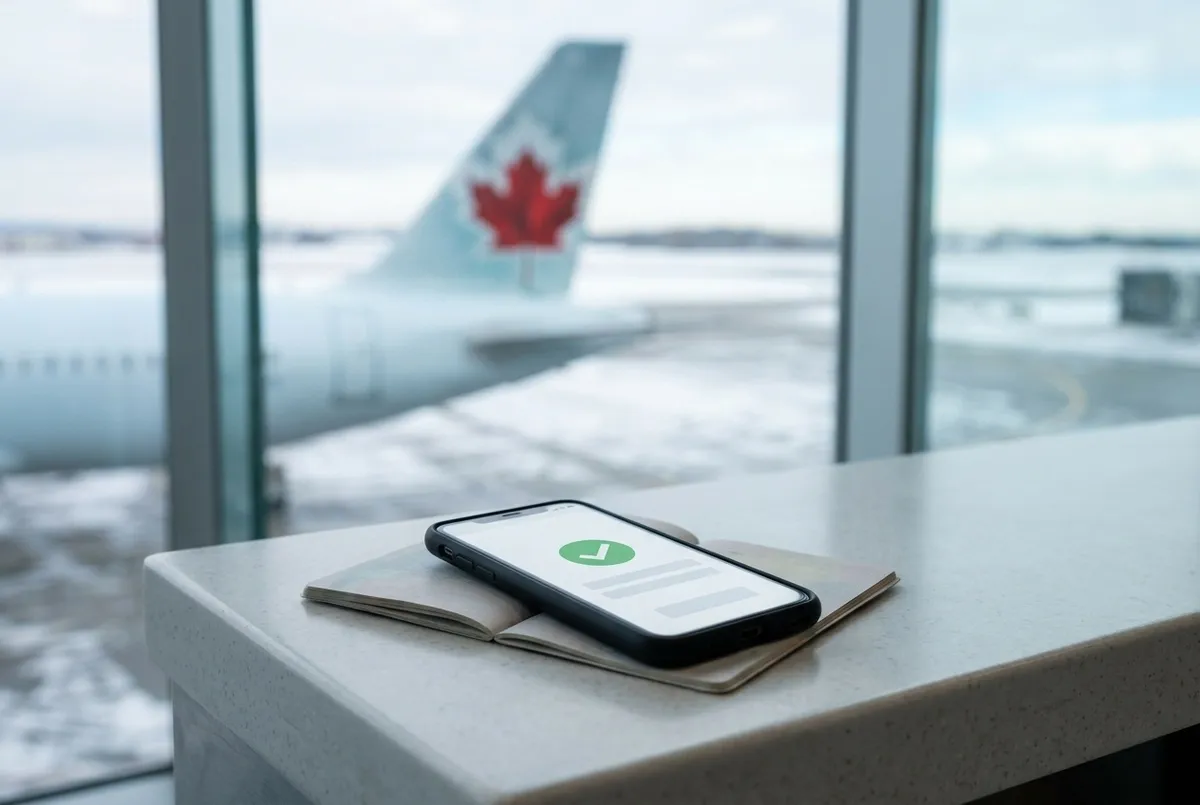
Every year, travellers are turned away at airport check-in desks because they arrived with the wrong document for Canada. Some assumed a passport was enough. Some paid a third-party website far more than the official fee and received nothing usable. Others held a valid eTA but had renewed the passport it was linked to. This guide explains what an electronic travel authorization is, who needs one, who is exempt, how citizens of certain visa-required countries can qualify for one instead of a visa, and why holding one still does not guarantee you will be allowed into Canada.
Key Facts About the Canadian eTA
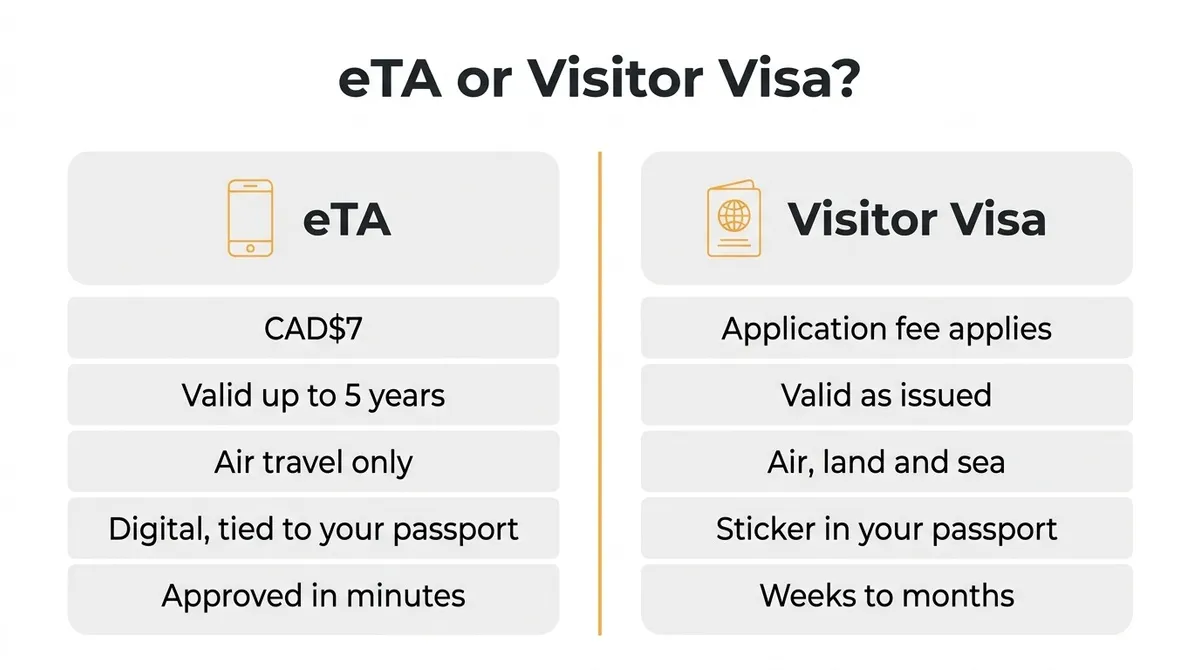
- Cost: CAD$7, paid directly to the Government of Canada. No licensed representative can charge you a government fee on top of that.
- Validity: up to five years, or until the passport it is linked to expires, whichever comes first.
- Scope: air travel only. An eTA does not cover arrival by car, bus, train, or boat.
- You need one or the other: an eTA or a visitor visa, never both.
- Not a guarantee: a border services officer makes the final decision on entry, regardless of what document you hold.
- Some visa-required nationals qualify: citizens of 15 otherwise visa-required countries can apply for an eTA instead of a visa when flying.
What an eTA Is and What It Is Not
An electronic travel authorization is a digital entry permission linked electronically to one specific passport. There is no sticker, no stamp, and nothing to collect. When you check in for your flight, the airline queries the system against your passport number and either boards you or does not.
A visitor visa, by contrast, is a physical document placed inside your passport by a visa officer who has assessed your application in full. It covers every method of travel, and it takes weeks or months rather than minutes.
The most important practical consequence of the eTA being tied to a passport: if you renew, replace, or lose that passport, your eTA does not follow you. You must apply again. Travellers who renewed a passport between booking and departure are one of the most common groups refused boarding.
Who Needs an eTA
Citizens of visa-exempt countries flying to Canada
If you hold a passport from a visa-exempt country and you are flying to or transiting through a Canadian airport, you need an eTA and a valid passport. You do not need a visitor visa.
Visa-exempt travellers arriving by land or sea
If you are from a visa-exempt country but arriving by car, bus, train, or boat including a cruise ship, you do not need an eTA. Your passport alone is sufficient. The single narrow exception is travel by sea from Saint Pierre-et-Miquelon, excluding cruise ships, which does require one.
If You Are From a Visa-Required Country
This is the provision most travellers do not know exists, and it can replace a months-long visa application with a form that takes minutes.
Citizens of certain visa-required countries can apply for an eTA instead of a visitor visa when flying to Canada. The eligible countries are Antigua and Barbuda, Argentina, Brazil, Costa Rica, Mexico, Morocco, Panama, the Philippines, St. Kitts and Nevis, St. Lucia, St. Vincent and the Grenadines, Seychelles, Thailand, Trinidad and Tobago, and Uruguay.
You must meet all three conditions:
- You have held a Canadian visitor visa in the past 10 years, or you currently hold a valid United States non-immigrant visa. A US visa must be valid on the day you apply for the eTA, but does not need to be valid on the day you fly.
- You are coming to Canada for a temporary stay, normally up to six months.
- You are flying to or transiting through a Canadian airport on a passport from one of the countries above.
Miss any one of the three and you need a visitor visa.
There is a hard limit here that catches people out. Even if you qualify, this route authorises air travel only. If you hold one of these passports and plan to drive to Canada from the United States, or arrive by bus, train, or boat including a cruise ship, you still need a valid visitor visa. That applies even if you never leave the ship.
Travellers Who Do Not Need an eTA
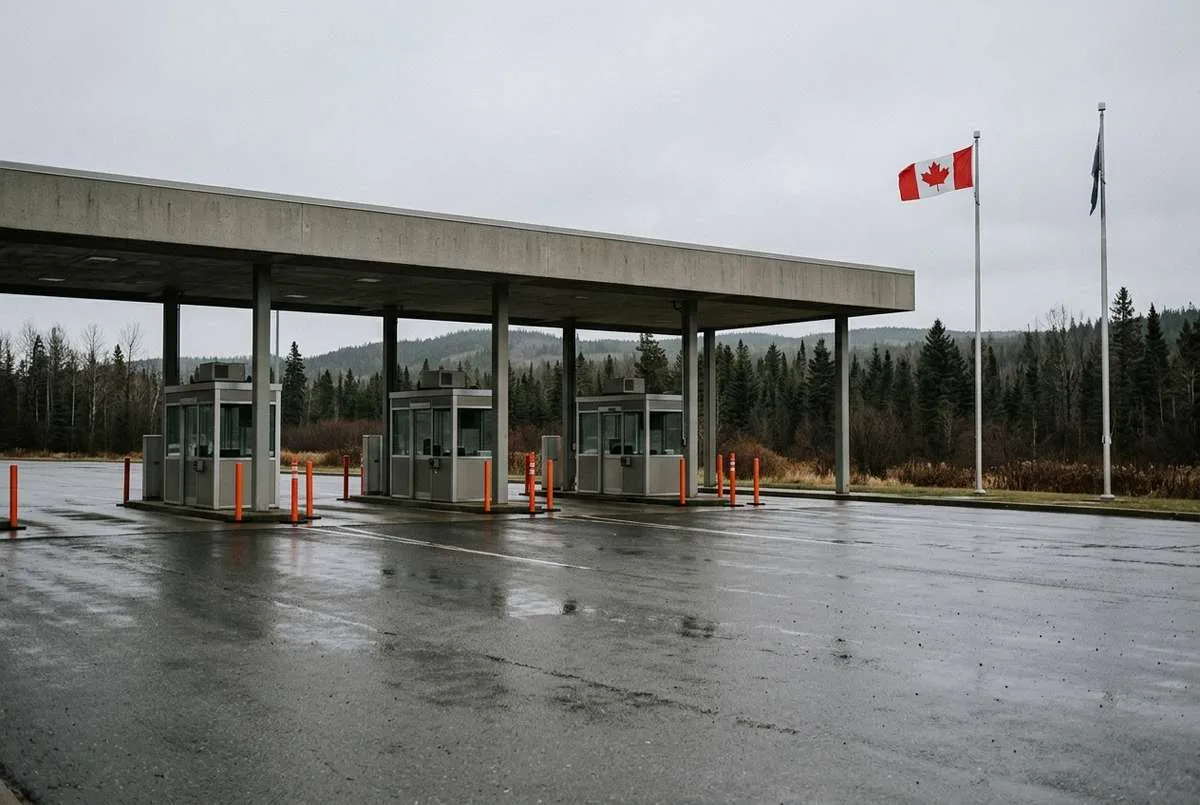
US citizens need neither an eTA nor a visa, and can enter by air, land, or sea with a valid US passport.
Lawful permanent residents of the United States are also exempt. Green card holders must carry a valid passport from their country of nationality together with valid proof of US status, for every method of travel. Acceptable proof includes a valid permanent resident card, a valid re-entry permit, or a foreign passport bearing an unexpired temporary I-551 stamp.
Canadian permanent residents need neither document, but must travel on a valid PR card or a Permanent Resident Travel Document. Worth knowing: permanent resident status does not expire. If you lived in Canada years ago and never formally renounced it, you may still hold PR status, which changes what you are entitled to present at the border and what you are not.
Dual Canadian citizens must travel on a valid Canadian passport. Canadian-Americans may use either a Canadian or a US passport.
Anyone already holding a valid Canadian visa does not need an eTA as well. Travel on the visa you have.
How to Apply, and What It Costs
The application is online, takes a few minutes, and costs CAD$7. You will need your passport, a credit or debit card, and an email address. Most applications are approved within minutes, though some are held for review and can take days.
Two warnings are worth stating plainly. First, apply before you book your flight, not after. Approval is usually fast but is not guaranteed to be. Second, the SERP for "Canada eTA" is crowded with third-party operators charging several times the official fee for what is a simple government form. A licensed immigration representative can advise you on eligibility and on a complex history, but nobody can process an eTA faster or more cheaply than the official system.
If your travel plans are more than a short visit, an eTA may be the wrong instrument entirely. Parents and grandparents visiting for extended periods should look at the Super Visa instead, and anyone arriving with the intention of studying needs a study permit rather than a visitor document.
Why an eTA Can Still Be Refused
An eTA authorises you to travel to Canada. It does not authorise you to enter. A border services officer makes that decision on arrival, assessing your purpose of travel, your finances, and whether you are likely to leave at the end of your stay. Travellers arriving for corporate meetings or trade events should review the guidelines for a Business Visitor Visa to ensure smooth entry.
You can also be found inadmissible on criminality, security, health, or misrepresentation grounds. If you have previously been refused entry or removed from Canada, an eTA will not help you: you may need an Authorization to Return to Canada first. If you have been refused before and were never told the real reason, GCMS notes will show you what the officer actually recorded on file. Where admissibility is genuinely contested, the matter may proceed to an admissibility hearing.
Common Mistakes to Avoid
- Renewing your passport after getting the eTA. The authorization is linked to the old passport and does not transfer. Apply again.
- Assuming an eTA covers land travel. It does not. Driving from the US on an eTA alone will not work.
- Paying a third-party site. The government fee is CAD$7. Anything substantially higher is a service charge, not a government cost.
- Applying for both an eTA and a visa. You need one or the other. Holding both wastes money and creates confusion at check-in.
- Declaring a criminal record incorrectly. An inaccurate answer is misrepresentation, which carries consequences far heavier than the refusal itself.
An eTA is a simple document, but the rules around who needs one, who is exempt, and who qualifies for one instead of a visa are not simple, and the cost of getting it wrong is a missed flight or a refusal recorded against your name. SEP Immigration, led by Sepehr Falahati (CICC and IRB member R533959), is a Toronto-based firm advising travellers and applicants on Canadian entry requirements.
This page is general information, not legal advice. Entry requirements and country lists change. For official guidance, see IRCC's pages on who can apply for an eTA and on eTA eligibility for citizens of some visa-required countries, or speak with a licensed representative.
Frequently asked questions
01How much does a Canadian eTA cost?
CAD$7, paid directly to the Government of Canada during the online application. Third-party websites that charge considerably more are adding their own service fee to a form you can complete yourself in minutes.
02How long is an eTA valid?
Up to five years, or until the passport it is linked to expires, whichever comes first. It permits multiple trips within that period, with each stay normally limited to six months.
03Do I need a new eTA if I renew my passport?
Yes. The authorization is tied electronically to a specific passport number and does not transfer to a new document. This is one of the most common reasons travellers are refused boarding.
04Can I drive to Canada with an eTA?
No. An eTA covers air travel only. Arriving by car, bus, train, or boat requires either a visitor visa or, if you are from a visa-exempt country, nothing beyond a valid passport.
05I am a green card holder. Do I need an eTA?
No. Lawful permanent residents of the United States are exempt, but must carry both a valid passport from their country of nationality and valid proof of US permanent resident status for every method of travel.
06Does an eTA guarantee I will be allowed into Canada?
No. It authorises travel, not entry. A border services officer decides admissibility on arrival and can refuse entry on criminality, security, health, financial, or misrepresentation grounds.
Stay informed
Get our immigration updates first on Google
Add SEP Immigration as a preferred source and our latest news and guides appear more often in your Google results.
About the Author

Sepehr Falahati
CEO of SEP Immigration
- CICC Licensed
- RCIC #R533959
- IRB Member
Sepehr Falahati is a Regulated Canadian Immigration Consultant (RCIC #R533959), licensed by the College of Immigration and Citizenship Consultants (CICC).
Read more about Sepehr FalahatiReviewed By


Continue Reading