

Vancouver has no immigration program of its own, and British Columbia's program is built to steer people somewhere else. Both statements are true, and understanding them together is the difference between a realistic Vancouver plan and a wasted year.
Every route into the city runs through a federal program or through the Provincial Nominee Program. The provincial route rewards job offers outside Metro Vancouver, so a Vancouver-based candidate is competing from a lower starting position than an identical candidate in Kelowna or Prince George. That does not close the door. It changes which door you should be using, and for many Vancouver-bound applicants the answer is Express Entry rather than the province.
This page covers how British Columbia now selects candidates, where Vancouver sits in that system, and which combination of provincial and federal routes gives you the best realistic path to permanent residence in the city.
There Is No Vancouver Immigration Program
Cities in Canada do not select immigrants. Immigration is a federal responsibility shared with the provinces, and British Columbia is the authority that nominates people who intend to settle anywhere within it, Vancouver included.
Vancouver also sits outside the community-level pilots. The Rural Community Immigration Pilot operates in a short list of small communities, and British Columbia's participating communities are West Kootenay, North Okanagan Shuswap, and Peace Liard. A Vancouver job offer cannot be used for any of them. The same applies to the Francophone Community Immigration Pilot.
Where the city does matter is in the details of your provincial file: the regional district your job sits in, whether your employer meets BC PNP requirements, and whether your occupation falls inside the province's current priorities.
Why the BC PNP Scores Vancouver Lower Than the Rest of British Columbia
This is the part most Vancouver-focused guidance leaves out, and it decides outcomes.
Skills Immigration candidates are ranked by the Skills Immigration Registration System, scored out of 200 points. Hourly wage is the single largest factor, worth up to 55 points. The area of British Columbia where the job is located is worth up to 25 points, and the scale is deliberately tilted: the Metro Vancouver Regional District sits at the bottom, a middle band covers places like Squamish, Abbotsford, Mission, and Chilliwack, and the rest of the province scores highest.
The practical consequence is straightforward. Two candidates with identical education, language scores, and experience will not rank equally if one takes a job in Burnaby and the other takes the same job in Kamloops. The province is using the scoring grid to distribute newcomers beyond the Lower Mainland, and Vancouver candidates absorb that cost.
The same logic runs through the business side. The Entrepreneur Immigration Regional stream is designed for smaller communities and is not available for a Vancouver business, while the Base stream permits a Metro Vancouver business but awards additional registration points for locating outside the Mainland and Southwest region.
What this means for a Vancouver candidate is not that the BC PNP is closed. It means your score has to be carried by the factors you can still control: wage above all, then language, education, and directly related Canadian work experience with your supporting employer. A Vancouver applicant with a generic offer at a modest wage is unlikely to see an invitation. A Vancouver applicant in a priority occupation at a strong wage still competes well.
BC PNP Care, Build and Innovate Priorities in 2026

British Columbia received 5,254 nominations for 2026, above its initial 2025 allocation of 4,000 but well short of what the province asked for. With limited space, the BC PNP now organises selection around three stated objectives, and your occupation's position within them matters more than your overall profile. The province publishes the current priority occupation lists on its BC PNP program page.
Care
The largest and most clearly defined priority. It covers healthcare across roughly thirty occupations, from physicians and registered nurses to medical laboratory technologists, licensed practical nurses, and social workers. It also covers three groups outside healthcare:
- Early childhood educators, who need a one-year or five-year certificate from the provincial ECE Registry to receive a targeted invitation
- French-speaking elementary and secondary teachers, who must be employed in BC's public K to 12 system and hold CLB 5 or higher in French
- Veterinarians and animal health technologists working toward Canadian certification
One detail catches people out: nurse aides, orderlies, and patient service associates must be registered with the BC Care Aide and Community Health Worker Registry before a targeted invitation can be issued. Healthcare workers employed by a BC health authority may also qualify for the separate Health Authority stream, which has its own broader occupation list.
Build
Aimed at the province's construction and infrastructure shortage, and limited to nine certified trades: welders, electricians, industrial electricians, plumbers, steamfitters and pipefitters, carpenters, construction millwrights and industrial mechanics, heavy-duty equipment mechanics, and heating, refrigeration and air conditioning mechanics.
Certification is not optional here. To receive a targeted invitation you need a valid trade certificate issued by SkilledTradesBC, or a registered SkilledTradesBC apprenticeship, matching the job you have been offered. Foreign trade credentials on their own do not satisfy this.
Innovate
The most flexible and the least predictable. Rather than a fixed occupation list, Innovate operates through high economic impact invitations targeting top talent across all sectors, including experienced entrepreneurs. Recent rounds have selected on criteria such as a minimum wage threshold combined with a TEER 0 to 3 job offer, or a minimum ranking score, and the province has said future rounds may use different factors again.
Innovate is where most Vancouver candidates outside healthcare and the trades will end up looking, and it is where the city's wage levels actually work in your favour. It is also worth being clear about what changed: the BC PNP's dedicated weekly tech draws ended in December 2024. Technology workers are not excluded, but they are now selected as high earners rather than as a protected category.
BC PNP Pathways for Vancouver Workers
Skilled Worker Stream
The main route. It requires an indeterminate, full-time job offer from an eligible BC employer in an eligible occupation, plus directly related work experience, language proficiency, and education appropriate to the role. Registration in the Skills Immigration system is free; the application fee comes later and was increased in January 2026, so confirm the current figure before budgeting.
Health Authority Stream
For candidates with a job offer from one of BC's public health authorities. Its eligible occupation list is broader than the general Care priority list and reaches into support and assisting roles, which makes it worth checking separately if you work in health services in Vancouver.
Express Entry BC
The enhanced option within Skills Immigration. If you already hold a valid Express Entry profile and qualify for a BC PNP stream, a nomination through Express Entry BC adds 600 points to your Comprehensive Ranking System score, which in practice secures a federal invitation. For Vancouver candidates this is often the most efficient combination, because it uses the province only as an accelerator rather than relying on provincial selection alone.
Two routes that older guidance still mentions are no longer usable. The International Post-Graduate stream, which allowed eligible master's and doctoral graduates to apply without a job offer, closed to new applications, and the graduate-specific streams announced in late 2024 were suspended before running at scale. If you are a recent BC graduate, the realistic route now runs through a qualifying job offer.
Federal Immigration Routes to Vancouver

You can land in Vancouver without touching the provincial program at all, and for many candidates that is the cleaner path.
Express Entry covers the Canadian Experience Class, the Federal Skilled Worker Program, and the Federal Skilled Trades Program, with category-based draws that have targeted healthcare, trades, education, and French-speaking candidates. Nothing in the federal system penalises a Vancouver destination, which is precisely why it suits candidates the provincial grid disadvantages.
The work permit route is also common. A Vancouver employer who cannot fill a role locally may pursue a Labour Market Impact Assessment to hire you temporarily, after which Canadian work experience feeds into both the Canadian Experience Class and the BC PNP. Many Vancouver permanent residents arrived this way rather than being selected from abroad.
Studying in Vancouver as a Pathway to Permanent Residence
Vancouver hosts the University of British Columbia, Simon Fraser University, BCIT, and a large group of colleges, and studying first remains a viable entry strategy. The sequence is a study permit, then a post-graduation work permit, then a provincial or federal application once you have Canadian work experience.
Be realistic about what changed. With the graduate-specific BC PNP streams closed or suspended, a Vancouver credential no longer opens a dedicated provincial door on its own. It gets you a work permit and Canadian experience, which are genuinely valuable, but the nomination still depends on the job you land afterwards and where it sits in the province's priorities. Choosing a program that maps onto Care, Build, or a high-wage Innovate profile is worth more than choosing on prestige alone.
Business and Entrepreneur Immigration in Vancouver
The BC PNP Entrepreneur Immigration Base stream allows a business anywhere in the province, Metro Vancouver included, and works through a two-stage structure: you register and are scored, then if invited you receive work permit support, move to BC, operate the business, and are nominated only after meeting a performance agreement. Eligibility generally rests on business ownership or senior management experience, personal net worth, a committed investment, and job creation. Requirements and thresholds are set out on the province's entrepreneur immigration pages and have been revised more than once, so verify current figures rather than relying on older guides.
The Regional stream, with lower thresholds, is not open to a Vancouver business by design. If your plan is specifically a Vancouver business, the Base stream is your provincial option, and you should expect to score below an equivalent proposal in a smaller community.
Federal options are often the better fit here. Vancouver has a genuine startup ecosystem, and the Start-up Visa route, which requires support from a designated incubator, angel investor group, or venture capital fund, does not penalise a Vancouver location. For buyers of established businesses or self-directed operators, the general entrepreneur immigration options are worth comparing before defaulting to the province.
What Vancouver Actually Offers Newcomers
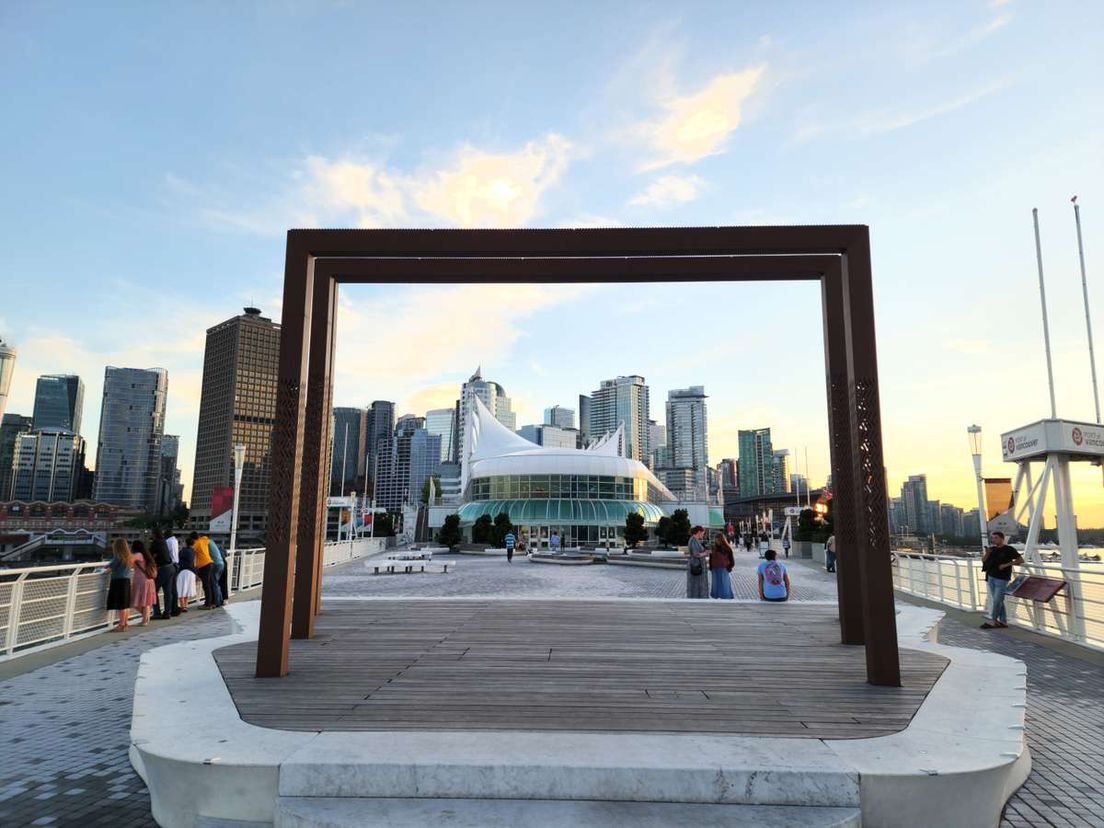
Vancouver is the largest city in British Columbia and one of the most internationally connected cities in Canada, with deep, established communities from across Asia, the Middle East, and Latin America. For many newcomers that matters as much as the job market: arriving somewhere your language is already spoken and your credentials are already understood shortens the settling-in period considerably.
The economy is diverse in a way that suits skilled immigrants, spanning technology, film and creative production, ports and logistics, health services, construction, and professional services. Wages are among the highest in the country, which is directly useful given how heavily the BC PNP weights hourly wage.
Three things deserve honesty before you commit:
- Housing is the constraint. Vancouver is consistently among the most expensive housing markets in Canada, and high wages do not fully offset it. Budget for rent as your dominant expense, and treat cost-of-living comparisons that average across British Columbia as misleading.
- The province wants you elsewhere. The regional scoring is not an accident, and it is unlikely to reverse while allocations stay constrained. If you are flexible on location, even for the first few years, your provincial odds improve substantially.
- Competition is national. Vancouver is a first-choice destination for a large share of newcomers, which means more applicants chasing the same employers than in most Canadian cities.
The offsetting case is real. The city has the wage levels, the sector depth, and the established communities that make settlement work, and the federal system does not penalise you for wanting to live there.
How SEP Immigration Helps With Vancouver Applications
British Columbia files fail for identifiable reasons. The most common are a candidate registering with a Metro Vancouver job offer and a score that was never going to clear a cut-off, a trades applicant without SkilledTradesBC certification assuming foreign credentials suffice, a care worker missing a registry requirement, a graduate building a plan around a stream that has closed, or a wage figure that the province considers inflated relative to the market.
We score your profile against the current system before you register, tell you plainly whether a Vancouver-based file is competitive or whether Express Entry is the stronger route, and identify which of Care, Build, or Innovate your occupation actually sits in rather than which one you hope it does. Where the province is not selecting candidates in your position, we compare federal and other provincial options instead of letting you wait. After nomination we prepare the federal permanent residence application and manage the status questions that arise while it is in progress. Sepehr Falahati is a licensed immigration consultant with the College of Immigration and Citizenship Consultants (CICC/IRB, R533959).
To find out which Vancouver pathway fits your situation, book a consultation and bring your work history, NOC code, job offer details including hourly wage and work location, education records, language test results, and any professional certification or registry status relevant to your occupation.
Frequently asked questions
01
Is there a Vancouver immigration program?
No. Canadian cities do not run their own immigration programs. You immigrate to Vancouver through a federal program or through the BC Provincial Nominee Program, and then settle in Vancouver. The province, not the city, decides who gets nominated.
02
Does a Vancouver job offer hurt my BC PNP score?
It does not disqualify you, but it earns you nothing on the regional factor. The Skills Immigration Registration System awards up to 25 points based on where the job is located, and the Metro Vancouver Regional District sits at the bottom of that scale. A comparable job in the Interior, the North, or on Vancouver Island scores higher on that factor alone.
03
What are the BC PNP Care, Build and Innovate priorities?
They are the three objectives the BC PNP now organises its selection around. Care covers healthcare, childcare, French-language K to 12 teaching, and veterinary care. Build covers nine certified construction trades. Innovate covers high economic impact invitations across all sectors, including experienced entrepreneurs. Occupations outside these priorities face a much harder path.
04
Can I still immigrate to Vancouver as a tech worker?
Yes, but not through a dedicated tech stream. The BC PNP's weekly tech draws ended in December 2024. Technology candidates are now selected through the general Skilled Worker stream and through Innovate high economic impact invitations, which favour high wages and senior roles rather than tech occupations as a category.
05
Do I need a job offer for the BC PNP?
For most Skills Immigration streams, yes. You generally need an indeterminate, full-time job offer from an eligible BC employer in an eligible occupation. The graduate streams that once allowed applications without a job offer have been closed or suspended, so a job offer is now the practical starting point for nearly all candidates.
06
How many nominations does British Columbia have for 2026?
British Columbia received 5,254 nominations for 2026, an increase over its initial 2025 allocation of 4,000 but still well below what the province requested. The province has received mid-year top-ups before, so the figure can move during the year.
General information, not legal advice. BC PNP streams, priority occupation lists, scoring factors, fees, and entrepreneur thresholds change. Verify current requirements at welcomebc.ca and canada.ca, or with a licensed representative, before acting.