
Nunavut Immigration: How to Immigrate to Nunavut in 2026
Reviewed by Mohsen Khorvash and Mahsa Barati
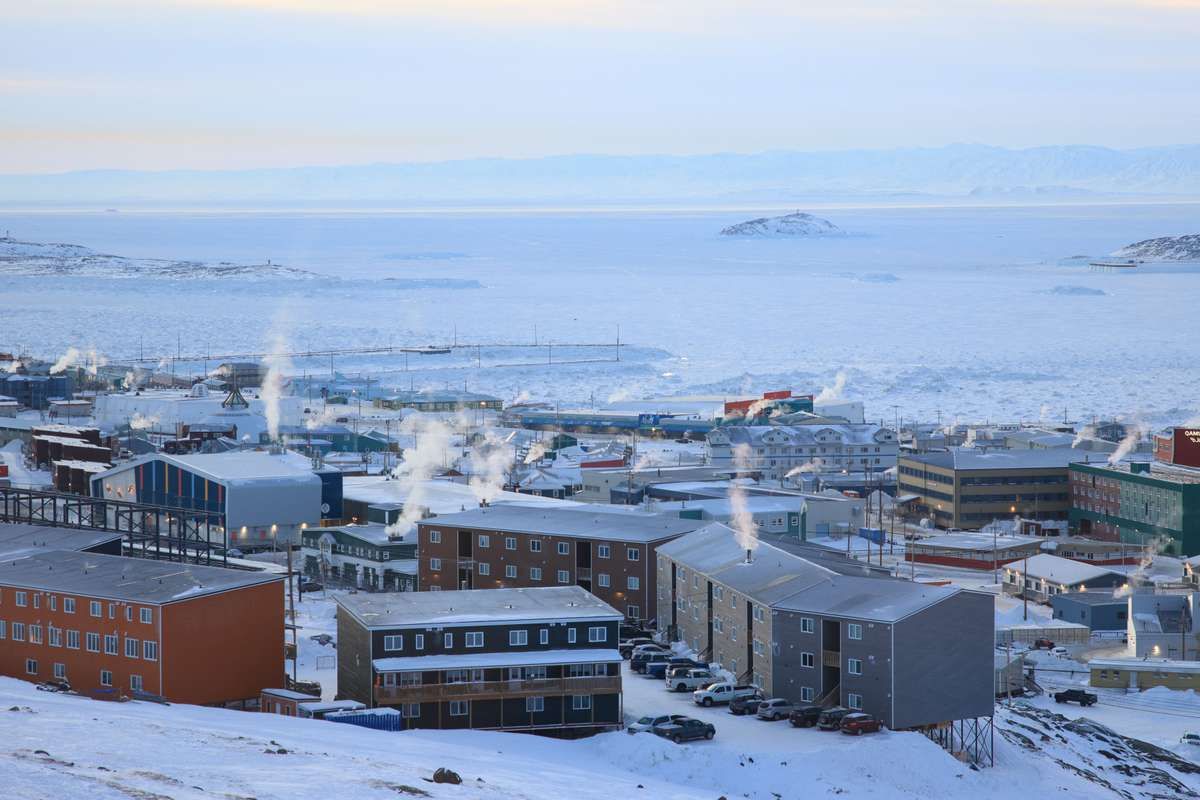
Nunavut is the one place in Canada where you cannot be selected by the region you want to live in. Every other province and territory either runs a Provincial Nominee Program or, in Quebec's case, operates its own selection system under a federal agreement. Nunavut has neither. Permanent residence in Nunavut is granted federally, and the territory has no say in who is chosen.
That single fact reshapes the whole plan. Applicants who count on a regional nomination to lift a mid-range profile have no such option here, so the federal route has to carry the application on its own. In practice that usually means Express Entry, a family sponsorship, or a work permit that later converts into permanent residence.
Nunavut is also small. Statistics Canada estimated the territory's population at 41,946 as of January 1, 2026, spread across 25 communities, with roughly 7,400 people in the capital, Iqaluit. Around 84 percent of residents are Inuit. Nothing about the immigration process is high volume, and very little of the online material written about it is current.
Does Nunavut Have a Provincial Nominee Program?
No. IRCC lists every jurisdiction that can nominate for permanent residence, and Nunavut is absent from that list. The Government of Nunavut states the position plainly on its official immigrate to Nunavut page: there is currently no immigration pathway specific to the territory, and anyone who has obtained permanent residence through a federal program is welcome to move to Nunavut and is entitled to free settlement services once there.
The consequence is worth stating clearly, because most pages covering this topic skip it. A nomination is worth 600 Comprehensive Ranking System points, which is enough on its own to guarantee an invitation in the next relevant round. Nunavut cannot issue one. If your Comprehensive Ranking System score is not competitive, moving your settlement plan to Nunavut will not improve it. Our comparison of Express Entry and the nominee programs covers how much that 600-point difference actually matters.
Why Nunavut Never Built a Nominee Program
Running a nominee program requires an administrative apparatus: intake systems, employer verification, settlement capacity, and staff to assess applications. With a population under 42,000 and an annual immigration volume in the dozens rather than the thousands, the territory has never established one. There is no published timeline for creating one, and no draft program has been announced.
How to Immigrate to Nunavut Through Federal Programs
Every route into Nunavut is a federal route. The territory places no restriction on where a permanent resident chooses to live, so the practical question is which federal program fits your profile.
Express Entry: Federal Skilled Worker Program
The Federal Skilled Worker Program is the most realistic route for applicants outside Canada with no Canadian work history. It requires skilled work experience, language testing, and an educational credential assessment for foreign qualifications, but no job offer. You enter the Express Entry pool and wait for a round of invitations at or below your score. Category-based rounds targeting health care, trades, and other priority occupations can matter more than the general rounds for candidates in those fields.
Express Entry: Canadian Experience Class
If you have already worked in Canada on a valid permit, the Canadian Experience Class generally offers the shorter path. Work performed in Nunavut counts the same as work performed anywhere else in Canada, with no additional territorial requirement. For people already employed in Iqaluit or Rankin Inlet on a work permit, this is usually the strongest option on the table.
Work Permits and Employer-Driven Routes
Most newcomers reach Nunavut on a work permit first and apply for permanent residence later. Employers hiring from outside Canada typically need a Labour Market Impact Assessment before the permit application can proceed, unless an exemption under the International Mobility Program applies. Health care, education, aviation, construction, and mining are the sectors that recruit internationally with any regularity.
Study Permits and Nunavut Arctic College
Nunavut Arctic College is the territory's only post-secondary institution, with its main campus in Iqaluit and community learning centres elsewhere. Confirm that the program you want is offered at a designated learning institution before applying for a study permit, since not every northern program qualifies. Note also that study permit holders are treated differently from workers under the territory's health coverage rules, which is covered further down this page.
Family Sponsorship
Sponsoring a spouse, partner, dependent child, or parent works identically whether the sponsor lives in Iqaluit or Toronto. The one Nunavut-specific consideration is the minimum necessary income test for parent and grandparent sponsorship, where northern wage levels can work in a sponsor's favour.
Why the Rural Community Immigration Pilot Does Not Cover Nunavut
This trips up a lot of applicants, because several older pages still describe Nunavut as eligible for northern pilots. The earlier Rural and Northern Immigration Pilot did list Nunavut among the territories whose communities could apply to participate. No Nunavut community ever joined, and the pilot stopped accepting new candidates in 2024.
Its replacement, the Rural Community Immigration Pilot, selected 14 participating communities across Alberta, British Columbia, Manitoba, Nova Scotia, Ontario, and Saskatchewan. None are in Nunavut, and the pilot only accepts applicants with a job offer from an approved employer inside one of those 14 communities. Eligibility to apply as a community is not the same as participation, and no Nunavut community currently offers this route.
Jobs in Nunavut and the Inuit Priority Hiring Policy
Public administration is the largest employer in the territory, which makes the Government of Nunavut the obvious target for a job search. It is also the hardest one for a newcomer to enter, and this is the detail almost no immigration page mentions.
Under Article 23 of the Nunavut Agreement, the territorial government is obliged to build a public service representative of the population it serves. Its Priority Hiring Policy gives Nunavut Inuit enrolled as beneficiaries priority over all other applicants in every job competition. Some competitions are restricted to beneficiaries outright, and the government tabled an Inuit Employment Plan covering 2024 to 2034 setting out how it intends to meet that obligation. Several territorial boards and agencies apply the same order of preference, with Nunavut Inuit first and Nunavut residents second.
This is not a barrier to immigrating. It is a reason to plan a job search realistically. Newcomers are hired into Government of Nunavut roles, particularly in fields facing chronic shortages such as nursing, allied health, and teaching, but the competition works differently than it does in Yellowknife or Whitehorse. Mining operations, airlines, construction firms, retail, and the health care system recruit from outside the territory more freely.
Housing Is Tied to the Job Offer
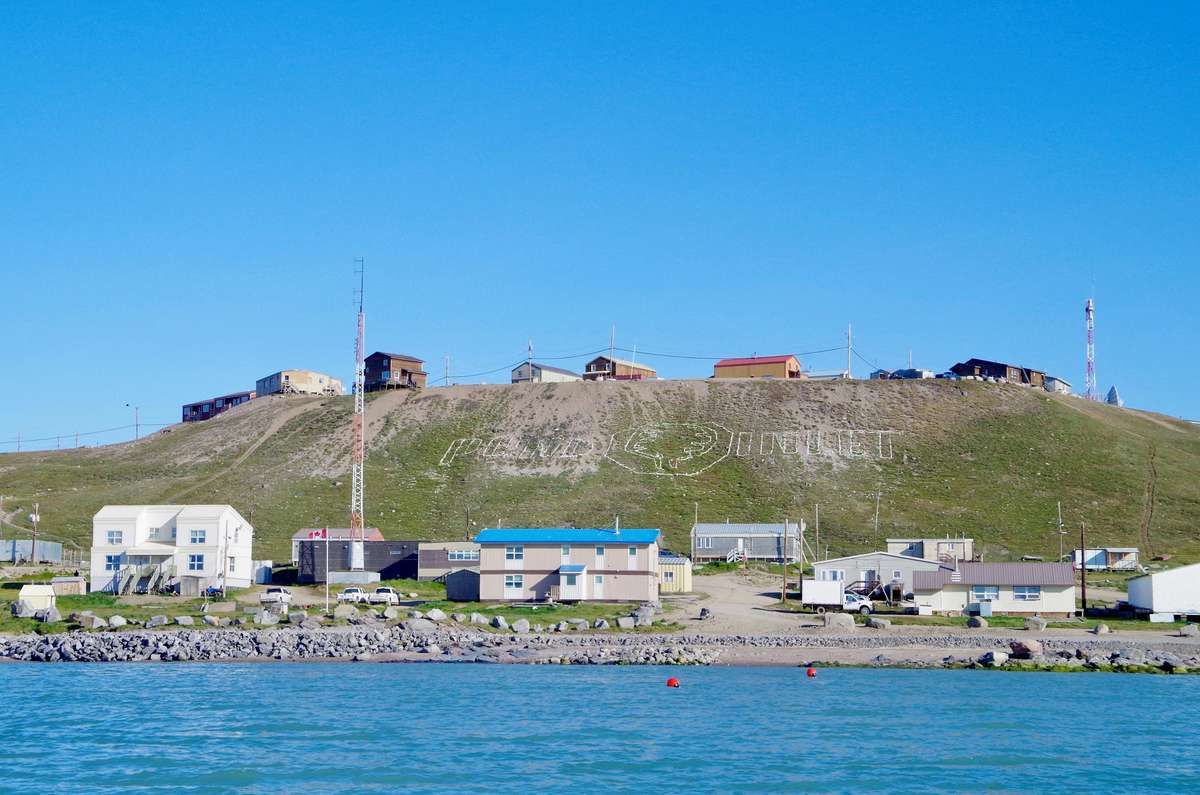
In most Nunavut communities there is effectively no private rental market. Housing is provided through employers or through subsidised territorial stock, which means a job offer and a place to live are usually the same negotiation. Ask what accommodation an offer includes, what it costs, and how long it lasts. Arriving without that settled is a serious problem in a community of 1,200 people.
Cost of Living in Nunavut and the Northern Residents Deduction
Nunavut pays the highest minimum wage in Canada, set at $19.75 per hour effective September 1, 2025, and adjusted each September under a formula tied to the Iqaluit consumer price index and average territorial wages. Incomes overall are high by national standards. The Government of Nunavut reports that in 2019 the territory recorded the highest median after-tax income of any province or territory at $93,800.
Those numbers exist because costs are extreme. Everything arrives by air or on the summer sealift, and grocery prices in smaller communities run far above southern levels even with the federal Nutrition North subsidy. Wage figures on their own tell you very little about what a Nunavut offer is worth.
One offsetting benefit is genuinely significant and routinely missed. All of Nunavut sits inside Zone A, the prescribed northern zone for tax purposes, which is the highest tier of the northern residents deductions administered by the Canada Revenue Agency. After living in the zone for at least six consecutive months, you can claim a basic residency amount of $11 for each day, plus a further $11 per day if you maintained your own dwelling and no one else in the household claims the basic amount. At the full rate that is $22 per day, or $8,030 across a complete year, deducted from taxable income. A separate travel deduction covers up to two personal trips a year plus medical travel, subject to limits.
Nunavut Health Care Coverage for Newcomers
Coverage under the Nunavut Health Care Plan does not begin the day you land. The Government of Nunavut extends coverage to permanent residents whose primary place of residence is Nunavut, and to holders of an employment or student visa valid for one year or more showing a Nunavut address.
The 12-month permit threshold is stricter than the rule in several provinces and in the Northwest Territories, so a short contract can leave you uninsured. Applicants must also provide proof of intent to make Nunavut their main residence for more than 12 months and confirm they are not temporary or rotational workers. Registration is handled by the Health Insurance Programs Office in Rankin Inlet. Apply on arrival and hold private coverage until the card is issued.
Nunavut Compared With Yukon and the Northwest Territories
If your goal is permanent residence in the North rather than Nunavut specifically, the two other territories offer something Nunavut cannot.
| Feature | Nunavut | Northwest Territories | Yukon |
|---|---|---|---|
| Nominee program | None | NTNP | Yukon Nominee Program |
| 600 CRS points available | No | Yes | Yes |
| Employer-driven PR stream | No | Yes | Yes |
| Business or entrepreneur stream | No | Yes | Yes |
| Rural Community Immigration Pilot communities | None | None | None |
| General minimum wage | Highest in Canada | Lower than Nunavut | Lower than Nunavut |
Candidates who want a northern life and a workable permanent residence strategy often find the Northwest Territories Nominee Program or the Yukon Nominee Program more practical, then relocate later if Nunavut is where they actually want to be. Permanent residents can move freely between territories once status is granted.
Common Myths About Immigrating to Nunavut
Much of what circulates online about Nunavut immigration is a decade out of date, including pages published by large commercial immigration sites. Three errors show up repeatedly.
Nunavut is not a province. It is a territory, created on April 1, 1999, and territorial status is not a formality. It shapes how the government is funded, how much authority it holds, and why it has never built its own selection program. Pages that describe Nunavut as Canada's newest province are wrong on the point that matters most to an applicant.
The wage and population figures are frequently stale. One widely read competitor page still lists the Nunavut minimum wage at $11.00 per hour, a rate the territory left behind years ago, alongside a population of 36,500 and a premier who left office in 2017. The minimum wage is $19.75, and the population estimate now sits close to 42,000.
Immigrating to Nunavut is not a back door to permanent residence. Because the territory receives so few newcomers, applicants sometimes assume competition is lighter and approval easier. The opposite is closer to the truth. There is no territorial nomination to win, no employer-driven permanent residence stream, and no regional pilot, so a Nunavut plan is a federal application with an unusually difficult settlement problem attached.
Working With SEP Immigration on a Nunavut Application
Because Nunavut has no program of its own, the work is in choosing the right federal route and building the strongest possible application within it. SEP Immigration is led by Sepehr Falahati, a Regulated Canadian Immigration Consultant licensed with the College of Immigration and Citizenship Consultants under number R533959. If you are weighing a job offer in Iqaluit, holding a Nunavut work permit and considering permanent residence, or trying to decide whether one of the other territories fits your profile better, we can review your situation and tell you honestly where you stand.
Disclaimer: This page is general information about immigrating to Nunavut and is not legal advice. Federal program criteria, wage rates, tax amounts, and health coverage rules change. Information here reflects IRCC, Government of Nunavut, and Canada Revenue Agency sources current as of August 2026.
Frequently asked questions
01Does Nunavut have a Provincial Nominee Program?
No. Nunavut is the only province or territory in Canada without a nominee program. IRCC confirms this on its own pages, and the Government of Nunavut states there is currently no pathway specific to the territory. Permanent residents admitted through any federal program may settle there.
02Can I immigrate to Nunavut without a job offer?
Yes. The Federal Skilled Worker Program does not require one, and Nunavut imposes no additional requirement. A job offer still matters in practice, since housing in most communities is arranged through employers rather than an open rental market.
03Is it easier to get permanent residence through Nunavut?
No. Elsewhere a nomination adds 600 points and effectively secures an invitation. Nunavut cannot nominate, so your federal score has to be competitive on its own.
04Is Nunavut part of the Rural Community Immigration Pilot?
No. None of the 14 participating communities are in Nunavut, and the pilot requires a job offer from an approved employer inside one of them.
05When does Nunavut health coverage start?
Not on arrival. Coverage applies to permanent residents whose primary residence is Nunavut and to holders of an employment or student visa valid for a year or more with a Nunavut address. Permits under 12 months and rotational work do not qualify.
06Can a foreign worker get a Government of Nunavut job?
It is possible but competitive. Under Article 23 of the Nunavut Agreement, enrolled Nunavut Inuit receive priority in all territorial job competitions, and some are restricted to beneficiaries. Health care, teaching, trades, mining, and aviation are the more accessible sectors for newcomers.
07How many people immigrate to Nunavut each year?
Very few. With a total population under 42,000 and no territorial immigration program, annual arrivals are counted in the dozens rather than the thousands, and settlement services are concentrated in Iqaluit.
Stay informed
Get our immigration updates first on Google
Add SEP Immigration as a preferred source and our latest news and guides appear more often in your Google results.
About the Author

Sepehr Falahati
CEO of SEP Immigration
- CICC Licensed
- RCIC #R533959
- IRB Member
Sepehr Falahati is a Regulated Canadian Immigration Consultant (RCIC #R533959), licensed by the College of Immigration and Citizenship Consultants (CICC).
Read more about Sepehr FalahatiReviewed By


Continue Reading